
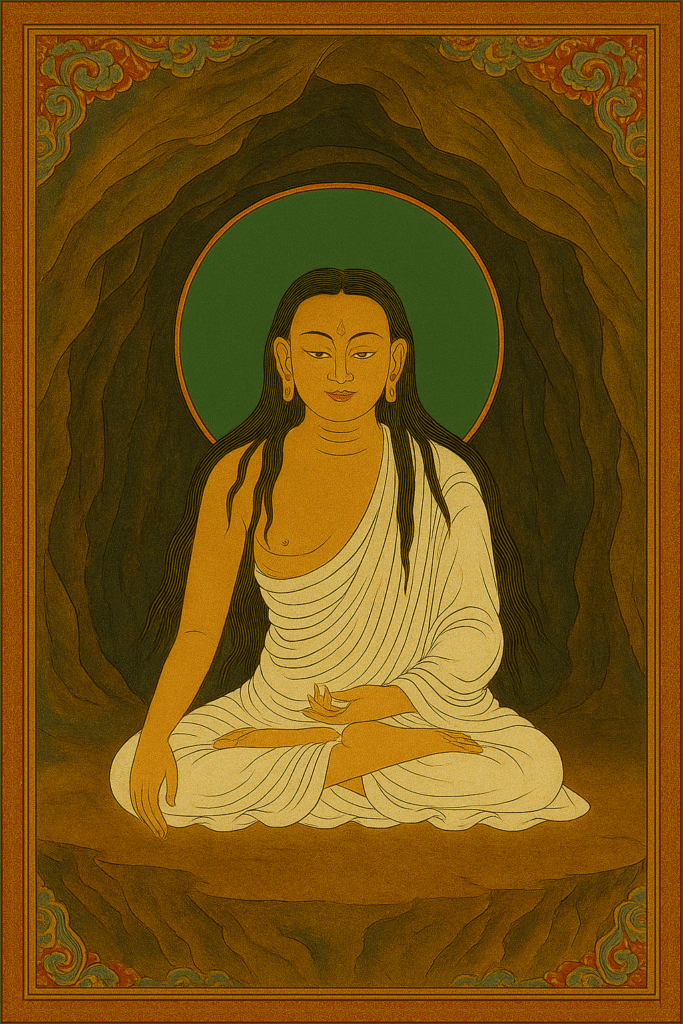
Pema Kundröl – My grandfather
The great master Pema Kundröl Gyalpo was born …
as the son of Father Ngakpa Gyudpa Nüshi and Mother Tsoknyi Nyima.
In his youth, he was a monk who resided at Ma-yang Monastery situated in Amdo, Tibet. One day his teacher gave him a beating and the young man ran away to his home nearby. His father scolded him and ordered him to return to the monastery immediately. But the young man refused to go back to the monastery and with a small group of monks they left for Lhasa. But running out of food, the group decided to split up. Padma Kündrol Gyalpo decided to go to the holy Mount Kailash where he stayed in a cave. One day he saw a group of pilgrims and asked where they were going. ‘We are going to receive teachings from a great master Degyal Rinpoche, who is a heart disciple of Dudjom Lingpa.’ Upon hearing that his heart was filled with devotion and decided to join them. Padma Kündrol attended the autumn teachings of Degyal Rinpoche and when they were over, Rinpoche called the young man. Inquiring about his background. ‘You have received my teachings, so now you are my disciple’, Degyal Rinpoche said. ‘But your karmic guru is Pema Lungok (Serta Rinpoche), who is now in Humla, Nepal’, he continued. Upon hearing that Padma Kündrol had a great devotion arising and went to Humla. When arriving in Humla, he inquired with the locals if they knew about one master called Pema Lungtok (Serta Rinpoche). Nobody knew about him, but they pointed to one mountain where they knew one Tibetan lama was doing retreat. They didn’t have a clue about who he actually was.
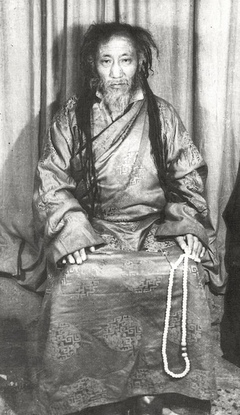
Pema Lungtok (Serta Rinpoche) was surprised to see someone coming visit him to his very remote retreat place. ‘Degyal Rinpoche, my teacher, has sent me here to find you. He told me you are my karmic teacher,’ he said. This delighted Pema Lungtok (Serta Rinpoche) and offered him to stay with him. However, Pema Lungtok was very poor and stayed together with his wife who was out begging for alms to sustain her husband in his retreat. So Pema Kundröl became his servant and started to provide for his teacher’s sustenance. Since he was also very poor he walked around bare footed: collecting alms in the nearby village, carrying water and firewood to the retreat place. Humla is a cold place during the winter with lots of snow. Even then he walked around without any shoes or decent clothes for the rest of Pema Lungtok’s three year retreat. He became the first student of Pema Lungtok in Humla and would later become his heart son.
He received many teachings from Pema Lungtok including Dudjom Tersar and Longchen Nyingthig. After he had received all the teachings, his teacher offered him all his personal ritual objects (bell, dorje, big and small damaru, kangling) and told him to go his own way. Pema Lungtok also offered him his personal chuwa (warm Tibetan style coat for men).
So Pema Kundröl went to another area in Humla, where he embared upon a retreat. But after six months he ran out of food supplies. So he decided just to survive on water. At one point he became so weak that he even couldn’t go fetch water. However, he was so adamant that he continued his retreat to the point where he collapsed and died. A few days later, locals from a nearby village called Yelwang, found him dead in his cave. They were looking after their cattle in the mountains but because of a heavy rain they took shelter in a cave where they found the dead yogi. After 7 days, many people of the village came to the cave to bring his corpse down and do the cremation. One lady called Damchoe, touched his face and suddenly he came back to life. They made him some tsampa soup and so he would regain his forces. They brought clothes and food so he could continue his retreat. He gained respect from the local village, as he became know as a delog. It refers to a person who appears to die, journeys into the afterlife realms (bardo, pure lands, hell realms, etc.), and then returns to life to recount what they experienced.
In Tibetan Buddhist culture, delogs are people who have temporarily left their body and returned with teachings, warnings, or visionary accounts, often written down as autobiographical delog literature. (Recommended reading. Delog Dawa Drolma.) https://treasuryoflives.org/biographies/view/Delok-Dawa-Drolma/P1TD67
He had many experiences during his delog experience, but never shared this, except with his root teacher Pema Lungtok. The only thing we know is, that travelled to a pure land where he had met a dakini who had given him two sons: Lama Ngodrub Gyaso and Lama Pema Wangchuk. Those two sons we prophesized to be great practitioners who would uphold the precious lineage.
He became known as Delog Pema Kundröl. He had mystical powers. When doing phowa (transference of consciousness) for other people, one could see the signs of his power. When shouting ‘PHAT’, they saw the body of a dead person shake. After the cremation they could see a hole in the fontanel (top of the head) caused by his phowa practice.
He later received many profound teachings from the great master Kyabjé Dudjom Rinpoche. He also practiced and accomplished the Longchen Nyingtik and the New Treasures of Düjom, displaying many signs of realization and attainment.
He travelled to India on a pilgrimage where he passed away at the age of 61. His exact date of birth is still unknown. He was a siddha who stayed in thugdam as a sign of his spiritual accomplishment and there was a sign of jangchub karma: white and red bodhicitta fluid flowing from his left and right nostril for a long time.
When his teacher Pema Lungtok got the news his main student had passed away, he proclaimed he had lost his right arm.
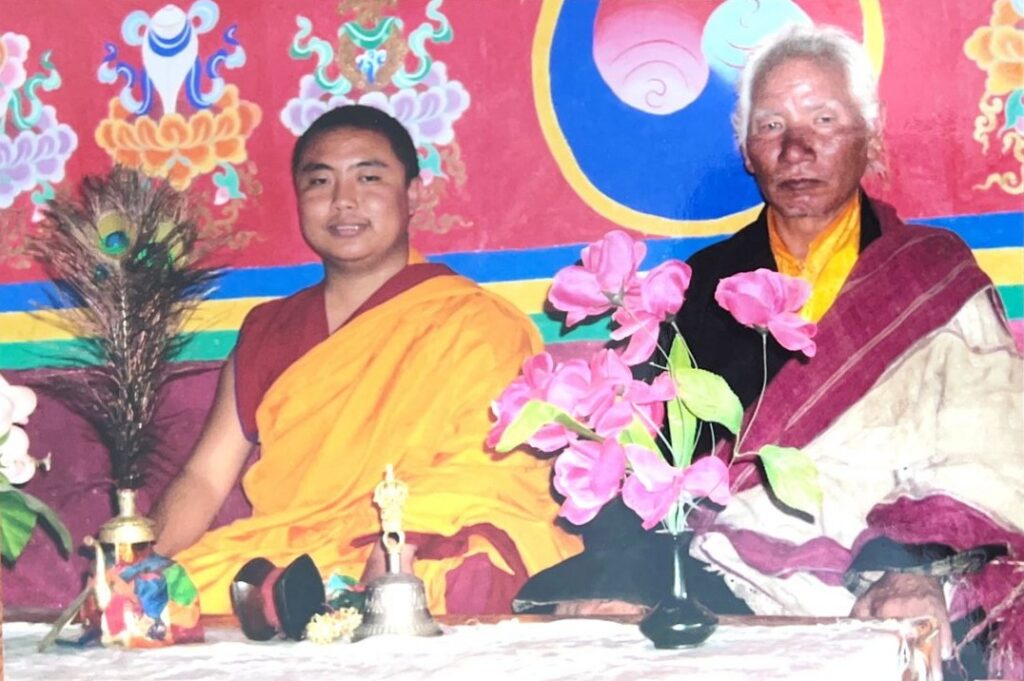
Khorchak Tulku and Lama Gyamtso
He had four children:The youngest son, Sherab Dorje. One daughter, Kunzang Wangmo and the elder son, Lama Ngodrub Gyatso https://www.rigpawiki.org/index.php?title=Lama_Gyamtso)
The middle son was the father of Khorchak Tulku Rinpoche, Pema Wangchuk.
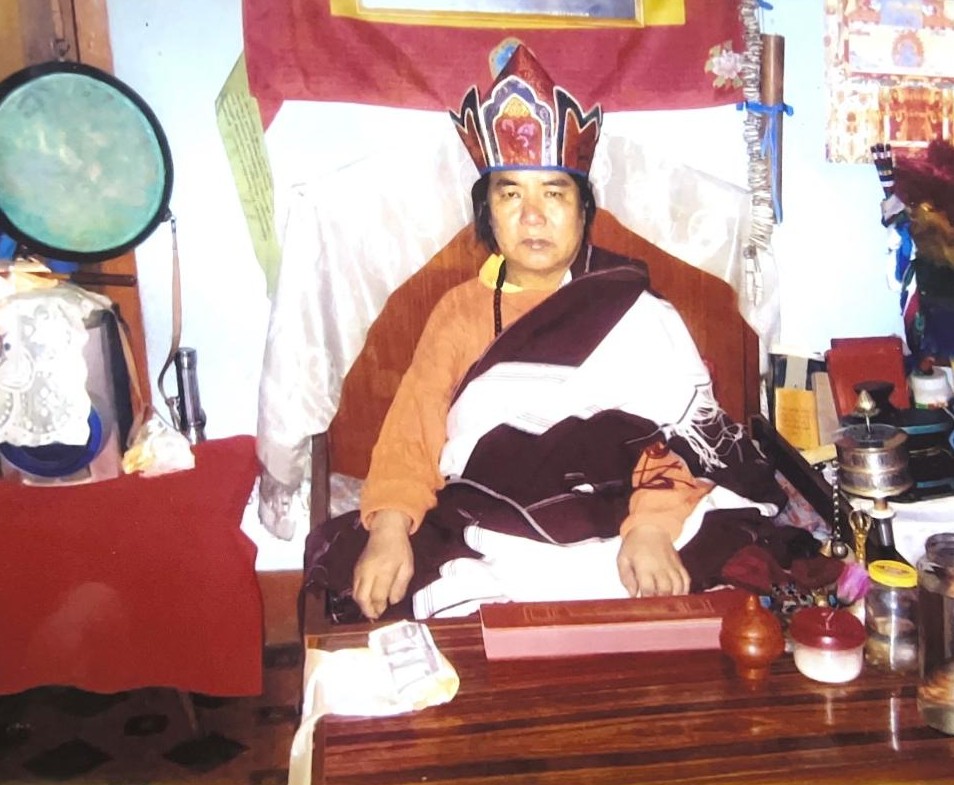
Pema Wangchuk
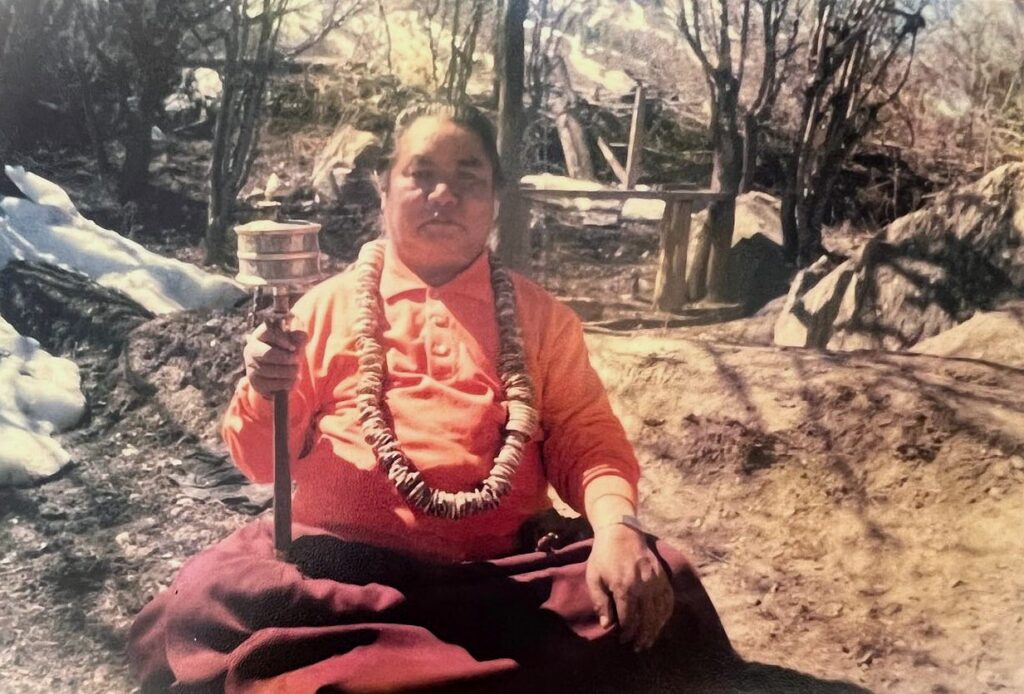
Pema Wangchuk – My father
The master Pema Wangchuk was born as the son of …
Ngakchang Lama Pema Kundrol Gyalpo and Mother Chöying Zangmo. In his youth, he studied reading and writing with his father.
When he reached the age of nine, his father requested the great master Serta Rinpoche Pema Lungtok Gyatso to ordain both of his sons as monks. But the master replied:
‘It is not necessary to make them monks. Your two sons will be of great benefit to the lineage of the New Treasures. Therefore, they must study the cycles of the New Treasures of Dujom Lingpa.’
Accordingly, he remained for a long time at the feet of Serta Rinpoche, receiving the empowerments, transmissions, and instructions of the New Treasures of Düdjom, as well as the pith instructions of the Great Perfection.
He served Pema Lungtok (Serta Rinpoche) for many years. Being his assistant during his retreat: making food, fetching water,… During that time he received all the teachings of Serta Rinpoche of Dujom Tersar en Longchen Nyingthig.
Pema Lungtok (Serta Rinpoche), Pema Wangchuk en his father (Pema Kundröl) went together to India.
Following the advice of Serta Rinpoche, he went to Kyabjé Dudjom Rinpoche, from whom he received many empowerments and transmissions of the Kama and Terma teachings. Pema Wangchuk later went to India where he was doing road construction when he was about 16 or 17 years old. Not judging between clean or unclean, high or low, but driven by his own perseverance to practice Vajrayana wholeheartedly. This allowed him to get some money for his spiritual path as he didn’t have any big sponsors.
During that time Pema Wangchuk received teachings from Dudjom Rinpoche, Taklung Tsetrul Rinpoche, Penor Rinpoche, Khatok Shing Kyong Rinpoche, 16th Karmapa, Dilgo Khyentse, Moktsa Rinpoche, Nyoshul Khen Rinpoche. He also studied astrology at that time.
After that he travelled back to Humla. He stayed there for some years with his brother Lama Gyamtso. He entered again a retreat again in Tsalang in Humla. Surviving on very little food offered by the local community he did another three year retreat. He only had one pair of clothes which he used to wear during both day and night time. He did his retreat while staying in a cave. He dedicated all his time to doing the practice, focusing on the troma chod of the Dudjom Tersar lineage. After finishing a meal, immediately he would immerse himself in the practice. At that time he met his wife who was very supportive of his practice and lifestyle. Realising the impermanence of this life he said: ‘Having one pair of clothes and some food is enough in this life. One should be more concerned about our future lives and dedicate one’s time solemnly to the practice of Dharma.’ He never slept after 3AM in the morning. Always immersing himself in the practice of Dharma. Because the newly married couple lived in a cave, the parents of his wife offered them a small stone house in the village. In total he did seven times a traditional three year retreat. Besides that he did many shorter retreats of six months and three months. In that way he did his whole life practice and retreat.
Keeping a notebook of all the retreats and practices he had done. Recited the Benza Guru mantra hundreds of millions times. He nearly reached one hundred million mantra recitation of Troma Nagmo (Khroda Kali). Besides that he also did lots of Vajrakilaya, Manjushri, and other mantra recitations. He read Milarepa’s biography 5000 times. Also the Lotus Sutra he read 5000 times.
He had visions of Guru Rinpoche (Guru Nangsi Zilnon) surrounded by clouds. In his dream he received teachings from Milarepa. In the village of Bajura (Nepal), people were doing blood sacrifice to a local spirit. Some people became possessed. He stopped all these practices and bound the local spirit to an oath. (Still today the people of Bajura pay great respect to him and his son Khorchak Tulku Rinpoche, who they consider as his successor. Recently Khorchak Rinpoche visited that village and spirit (speaking using the body of the shaman) offered his respect to Khorchak Rinpoche. Pema Wangchuk stayed in Bajura and did a three year retreat there.
He would write poetry, play the flute and was eloquent in Tibetan grammar. Besides that he was an excellent wood carver who could carve Tibetan printing blocks for printing Dharma texts.
His understanding of Dzogchen was profound, having applied the teachings wholeheartedly his whole life. In 2006 he passed away in Kathmandu at the age of 64. Shiva Rinpoche (Tulku of Serta Rinpoche) him then he would look after him as his own son.
He also met and received teachings from many other great masters, such as:
• Gyalwang Karmapa Rigpé Dorje,
• Dilgo Khyentse Rinpoche,
• Dodrupchen Rinpoche,
• Pema Norbu Rinpoche,
• Kathok shing kyong Rinpoche,
• Kathok Moktsa Rinpoche,
• Taklung Tsetrul Rinpoche,
• Thrangu Rinpoche,
• and the Khenpo of Myoshul Monastery, among others.
As in the traditions of the former great masters, he relied on austerities—wearing only three white cotton cloths and sustaining his life with the vital winds. He engaged in retreat practice over many years: seven times three years, five times six months, seven times one hundred days,dwelling in retreat in the mountains.
He had one son, the tulku Khordrak Ngawang Kunga Chözang (Khorchak Rinpoche).
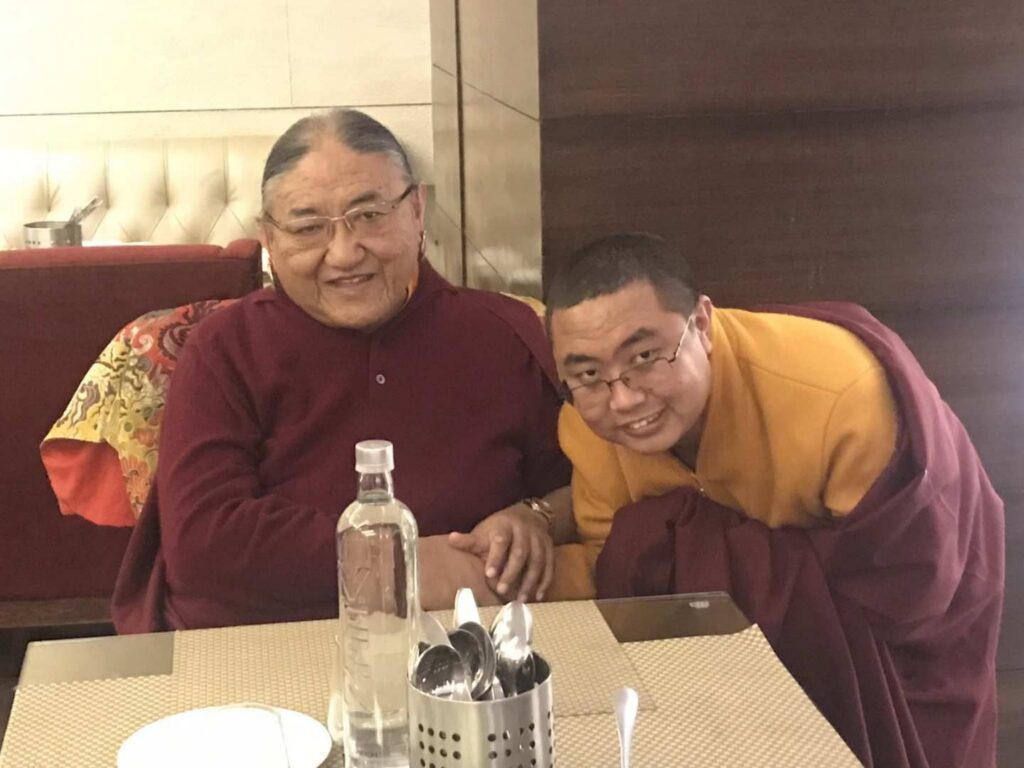
Khorchak Tulku
The Tulku Ngawang Kunga Chözang (Khorchak Tulku Rinpoche) was born in 1987 …
in Tsalang, Humla. Humla is situated close to the Tibetan border, near Mount Kailash. As of today, the village of Tsalang still has no road access. He is the only son of his father, Ngakchang Pema Wangchuk, and his mother, Dorjé Khandro, and was born in a very simple home in the Himalayan region of Humla, Nepal.
Since his father dedicated his whole life to Dharma practice, the family’s financial resources were extremely limited. They lived in a small house where even the family cow shared the same room. Khorchak Rinpoche’s area had no medical facilities or midwife. He was born in a retreat place. The family was so poor that they did not even have proper clothes for the baby, so they wrapped him in an old torn T-shirt.
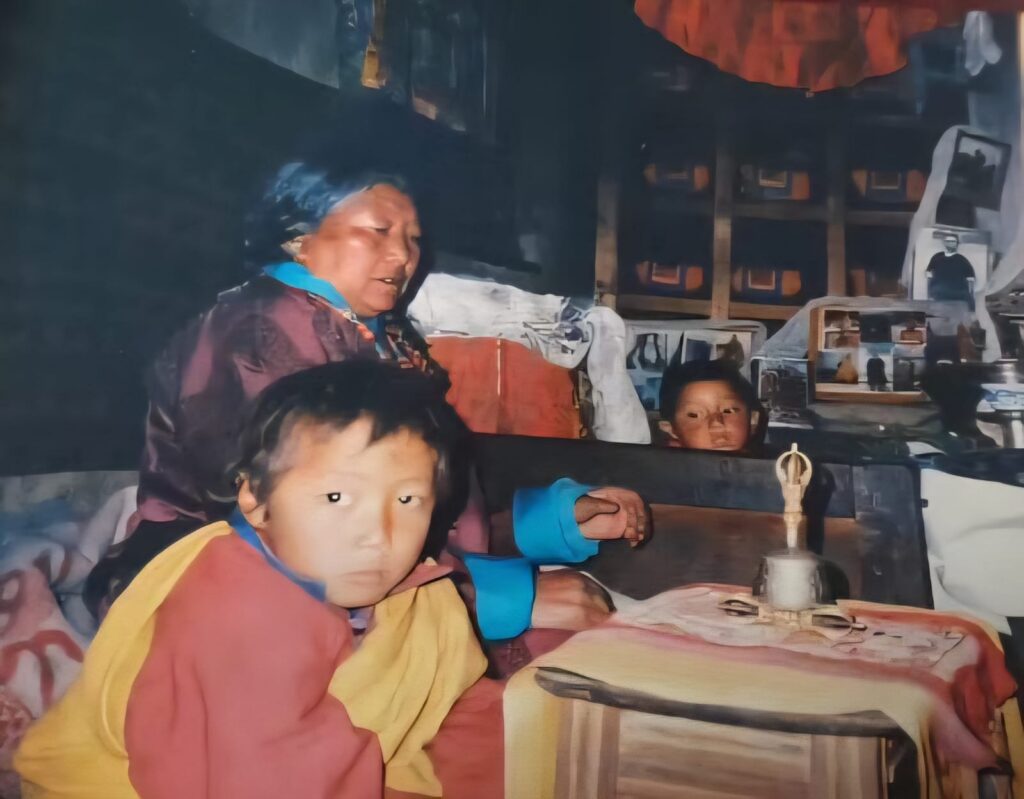
When he was three years old, one night while asleep, his mother heard him reciting prayers in his sleep. The next day she borrowed a tape recorder from a friend and recorded him chanting in his sleep. Listening carefully, they heard their child reciting and repeating lines from the Manjushri Nama Sangiti. His father asked not to mention the child’s unusual behavior to others, fearing it might bring obstacles. At the age of three, he displayed many extraordinary signs of remembering past lives. He told his parents that he was the reincarnation of Lama Pasang Nyendrak from Khorchak Gompa in Tibet, describing in detail the ritual objects he possessed and the masks used during ritual dances. His father, being a yogi, did not give too much importance to his son’s words.
When Khorchak Rinpoche met Lama Kunga Gyaltsen Rinpoche of the Sakya Lineage, he told the lama that his ritual objects and texts were still at his monastery in Tibet. When asked who he was, the boy replied, “I am Lama Pasang Nyendrak.” The lama believed that this child was indeed the reincarnation of that master.
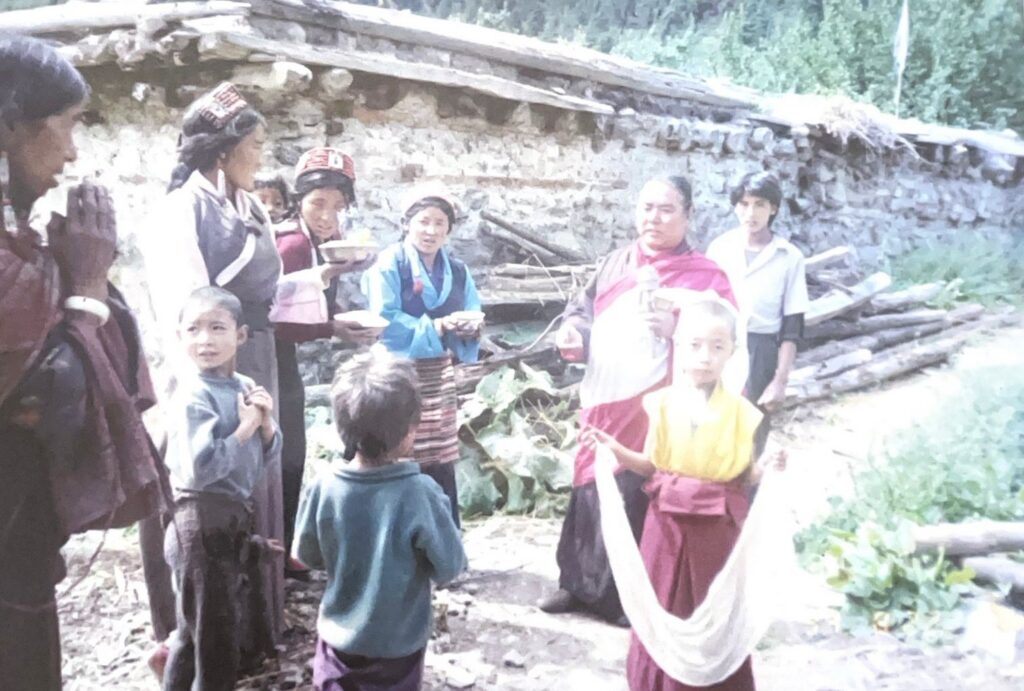
Young Khorchak Tulku with his father. Humla, Nepal.
The family decided to travel to Tibet and Khorchak Monastery since their son repeatedly said he wanted to bring back his belongings from his former life. As his father was a yogi without possessions, they had no resources to travel and survived by begging for alms along the way.
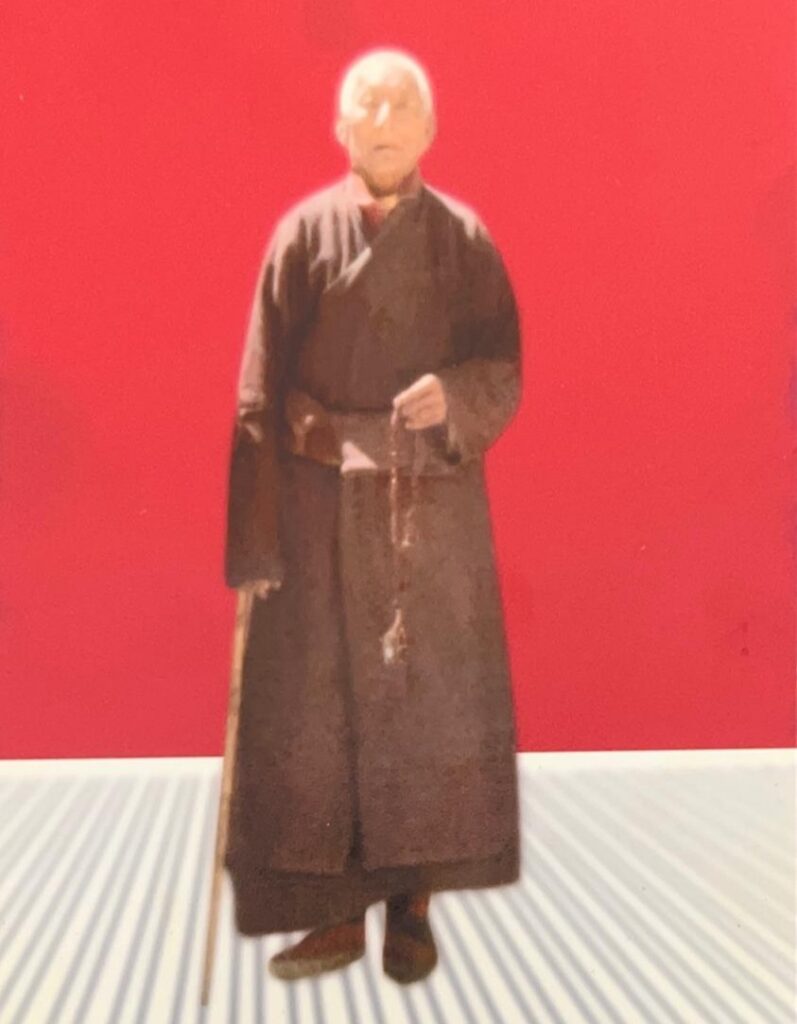
When they approached the house of one of his father’s acquaintances in the village of Drangke (near Khorchak Gompa), one lama welcomed them. The young boy immediately recognized his former student and exclaimed, “Lama Rinchen!” He said, “I know your house!” Everyone was surprised that he knew the lama’s name. Lama Rinchen said, “If you know my house, lead the way.” The boy walked
Lama Pasang Nyendrak Rinpoche
ahead, stopped at a door, and said, “There is a black dog inside—you go first.” When they entered, he correctly described the shrine room (chökhang) and showed where everyone used to sit. The boy told Lama Rinchen that he still had his mandala and requested it back. His father, uncomfortable with his toddler’s bold speech, gave him a slap, and the child cried himself to sleep. The next morning, Lama Rinchen, fully convinced that this was his teacher’s reincarnation, offered a khatag (ceremonial scarf) and sweets, asking the parents to care for the child well. He said, “What your son mentioned about the mandala is true. Before Lama Pasang Nyendrak passed away, he made a Vajrayoginī mandala on a wooden board—and I still have it.” He opened a black box and took it out. The boy shouted, “This is my mandala!” Everyone was convinced that the child was indeed the reincarnation of the previous Lama Pasang Nyendrak Rinpoche.
“Khorchak Lama Passang Nyendrak Rinpoche passed away in 1984, three years before the young boy was reborn. The previous Khorchak Tulku was born in Khorchak, Purang, in Ngari. From childhood, he entered the Khorchak monastery to study the Dharma, where he learned reading and writing, and trained in rituals and practices.
As he matured, he went to Ngor monastery in Tsang, where he received many empowerments and instructions of the glorious Sakya tradition, primarily the Lamdré (Path and Fruit), from Ngor Pende Khenchen, Ngor Khangsar Khenchen Dampa Rinpoche, and Ngor Luding Khen Rinpoche.
At Sakya, he received extensive profound teachings from Sakya Puntsok Phodrang’s Ngawang Thutop Wangchuk, Drolma Phodrang’s Dakchen ngawang Kunga Rinchen, and Lhakhang Khenchen Jampal Zangpo. When the Drolma Phodrang patriarch’s son was born, he went on a pilgrimage tour to the upper regions [on their behalf], and served as an attendant who pleased [the patriarch’s] heart.
From Dzongsar Khyentse Chökyi Lodrö Rinpoche, he received many Rimé (non-sectarian) empowerments and instructions. From Drikung Kyabgön, Drikung Drupön Rinpoche, and the lamas of Tsurphu, he properly received instructions on the Six Dharmas of Naropa.
In the latter part of his life, he devoted himself exclusively to retreat practice. He passed away accompanied by many wondrous signs including rainbows and three beams of light.“
Later, Lama Rinchen rode to Khorchak Monastery and reported that the reincarnation of Lama Pasang Nyendrak had been born in a poor family in Humla, explaining everything that had occurred.
When the family returned to Humla, they were visited by horsemen from Khorchak Monastery in Tibet. The young Khorchak Tulku ran inside and exclaimed, “Mom, my brother Jampal is coming!” It was indeed the previous lama’s younger brother, Jampal, who came to see his reincarnated brother. He questioned the boy in detail about his previous life, and the boy answered everything precisely—how his house looked, who his parents were, what ritual objects he had, and more. Jampal began to cry, declaring the child to be unmistakably the reincarnation of his brother. He requested that the family take good care of him and sent food and clothes every year.
At age five, Khorchak Monastery requested that the boy be sent to the monastery for training. His father, a strict yogi opposed to the tulku system, believed titles could lead to arrogance and said, “A title can lead one to the Pure Land or to the Hell Realm.” Thus, they decided the child should remain with his father, who became his first teacher. Around that time, a Nepalese government official visiting the local school interviewed the children. The young Khorchak Tulku told him many things about his previous life, which shocked the official. He later published the story in a Nepalese magazine, which was read by travelers from France visiting Mount Kailash through Humla. Curious, they came to see the boy, offering sweets and toys in exchange for an interview.
Khorchak Tulku received his first empowerment (Throma Nagmo) at the age of 5 or 6 from Lama Tsewang Rinpoche of Namkhai Kyungdzong Monastery, who was the reincarnation of Tulku Longtok. Only seven people attended. Lama Tsewang Rinpoche was the reincarnation of one of the thirteen heart disciples of Dudjom Lingpa who attained the rainbow body and was a principal propagator of the Dudjom lineage. He gave the young Khorchak Tulku a lama’s robe and initiated him into the practice of Throma Nagmo. By age seven, the boy had memorized the entire middle-length Throma Nagmo text, and by eight, the long version. At nine, he learned Chinese astrology from his father.
Around age seven or eight, he asked his father to teach him meditation. His father, a Dzogchen practitioner of Thögal, would sit motionless for hours at sunrise and sunset. The boy wanted to learn, but his father told him he was too young and could not attain siddhi if he viewed him merely as his father rather than as his root lama. Instead, he told him to visualize Chenrezig and recite his mantra. The young boy would dedicate all his merit for the flourishing of the Buddha Dharma.
In October 1994, he received the Rinchen Terdzöd empowerments from Penor Rinpoche. To finance the journey to Kathmandu, the family sold the food they had begged for. They flew from Simikot to Nepalgunj and then took a bus to Kathmandu, staying in a small room behind Shechen Monastery while receiving empowerments for three months.
At age ten, the young boy completed his Ngöndro practice of the Dudjom Tersar. During the day, he attended government school classes.
His father taught him humility, saying, “We are practitioners—we must make our ego smaller, not bigger.”
In 2000, they went to Kathmandu again to receive empowerments from Khatok Moktsa Rinpoche, including Ngagyur Kama and Dundul Longsal. His father was pleased that his son had received the main Nyingma teachings.
Later, a Sakya monk named Lama Ram Bahadur advised him to study Buddhism in India. This inspired him to enter Sakya College in Dehradun. His father reminded him to join as an ordinary monk, not as a tulku, and to live a practitioner’s life.
Upon arrival at Sakya College, a monk from Khorchak Monastery recognized him as the reincarnation of Lama Pasang Nyendrak and introduced him to His Holiness the 41st Sakya Trichen Rinpoche, who confirmed this recognition and gave him the name Ngawang Kunga Chözang.
He studied philosophy diligently, often remaining at the monastery during holidays due to lack of funds. “Being poor was a blessing,” he said, “because it kept me from distractions.” He excelled in his studies, became a revision teacher (kyorpon) for three years, and later a teacher for junior monks. He completed his bachelor’s and master’s degrees, earning the title of Lopön.
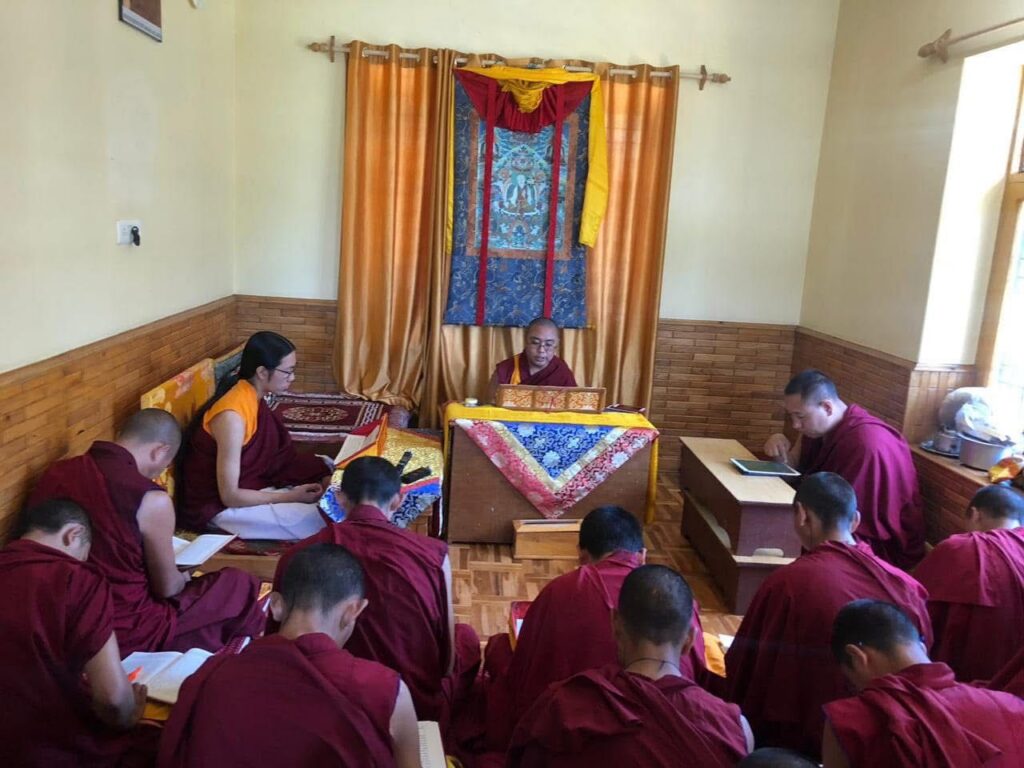
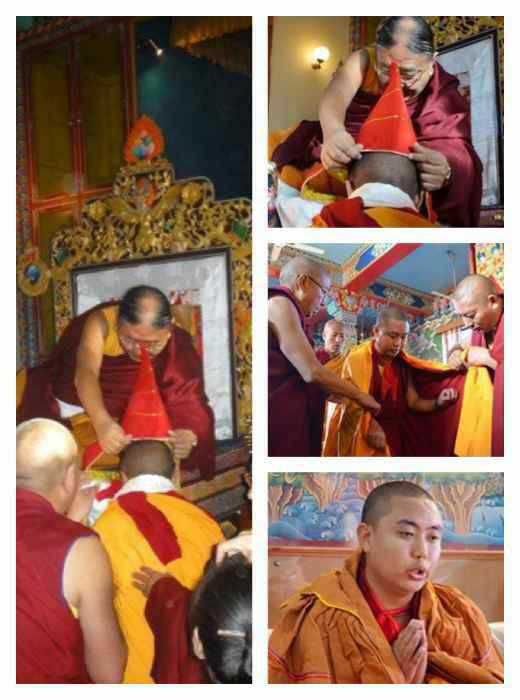
In 2012, he visited Ladakh to deliver a talk on Madhyamaka philosophy as a representative of the Sakya Lineage, impressing many scholars. His Holiness Sakya Trizin appointed him Khenpo of Sakya College in 2013, remarking: “It’s easy to be born a tulku, but becoming a Khenpo and scholar requires great effort.”
As Khenpo, he taught at Sakya College for one year. Later, the Royal Sakya families requested him to tutor the children of both the 42nd Sakya Trizin and Phuntsok Phodrang. He alternated between the two households for eight to nine years until 2022.
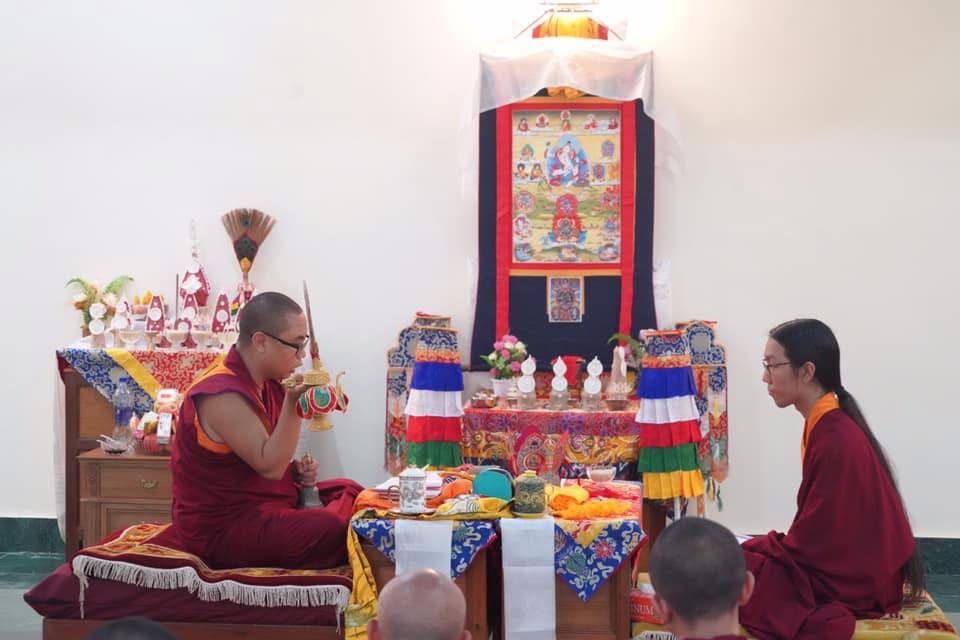
Khorchak Rinpoche, eager to study all traditions, received teachings from many great masters, including:
- The 41st and 42nd Sakya Trichen Rinpoches (Lamdré, Vajrayogini, Vajrakilaya cycles)
- Luding Khenchen Rinpoche (Compendium of Sadhanas and Vajrayoginī)
- Taklung Tsetrul Rinpoche (Complete Northern Treasures)
- Shechen Rabjam Rinpoche (Ja Tsön Pö)
- Namkha Ningpo Rinpoche (Nyingtik Tsapod)
- Drigung Kyabgön Rinpoche (Fivefold Mahamudra)
- Khuwo Lama Ngödrup Gyatso (New Treasures of Dudjom Tersar)
- Gyalse Rinpoche, Lama Jigme Namgyal Rinpoche, and others.
It is Rinpoche’s aspiration to continue the living practice lineage of Buddhism. Having received both scholarly training in the Sakya tradition and the yogic training from his father, he seeks to inspire practitioners to apply Dharma beyond sectarian boundaries. Rinpoche has established a retreat center in Namo Boudha, one hour outside Kathmandu, where anyone can undertake meditation retreats free of charge—thus fulfilling the wishes of both his father and his teachers.
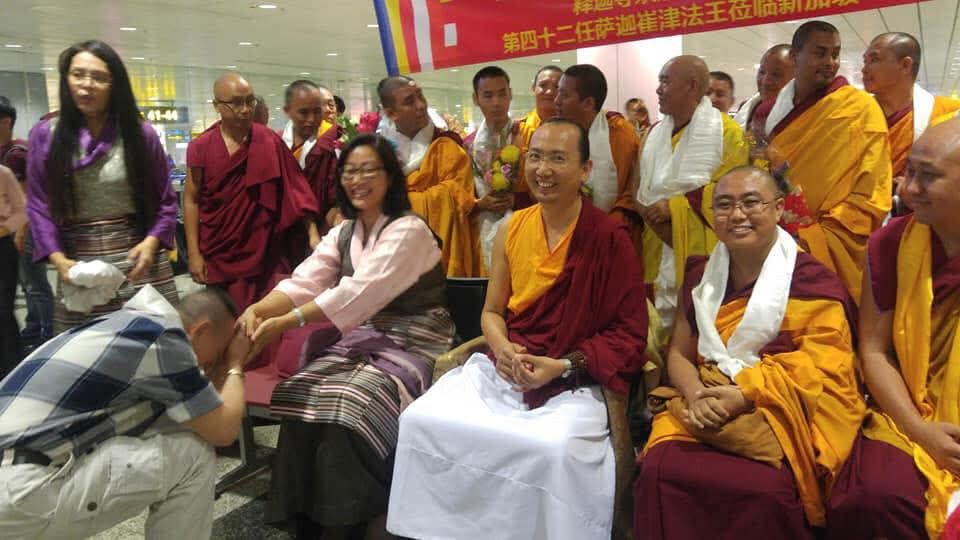
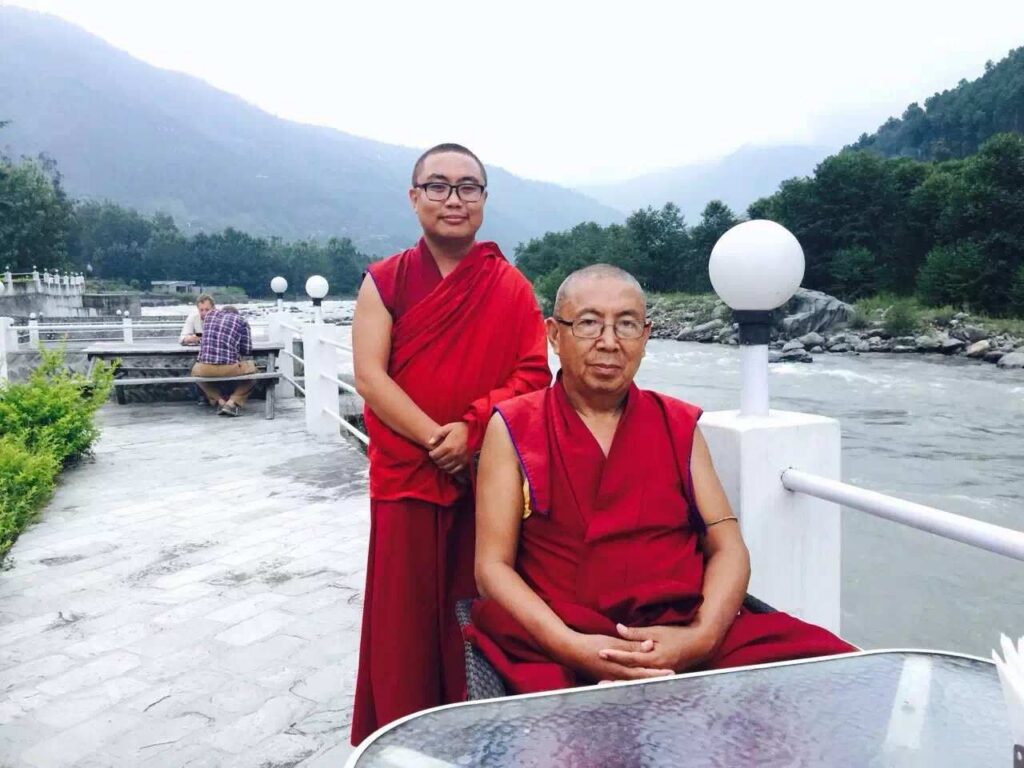
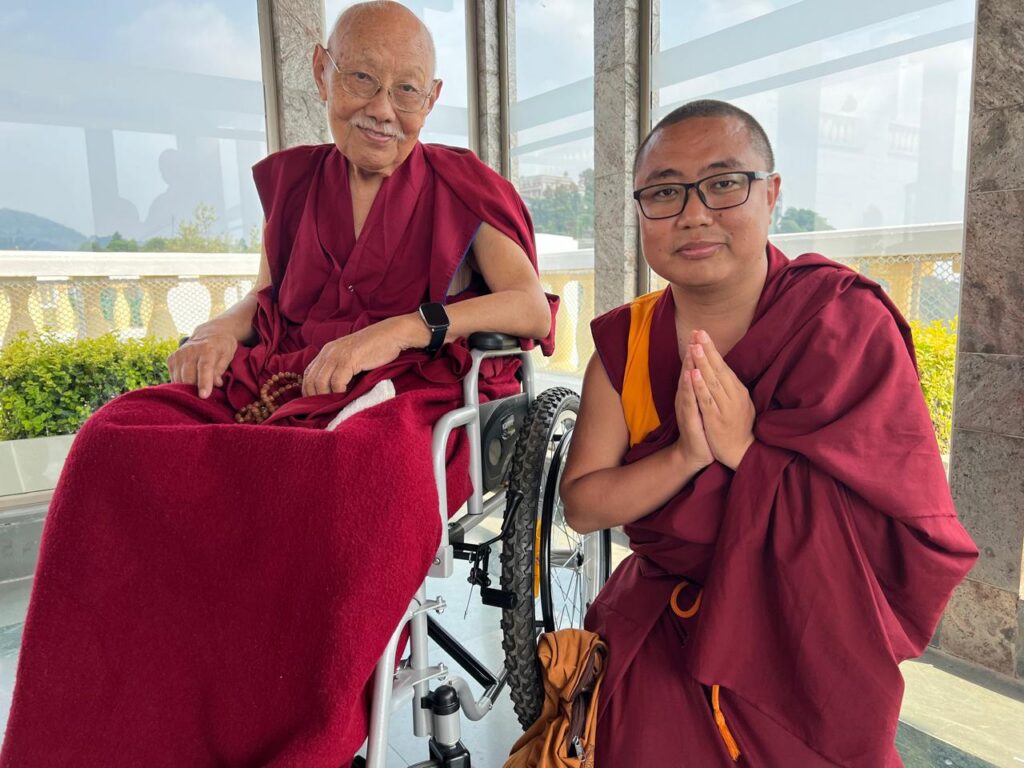
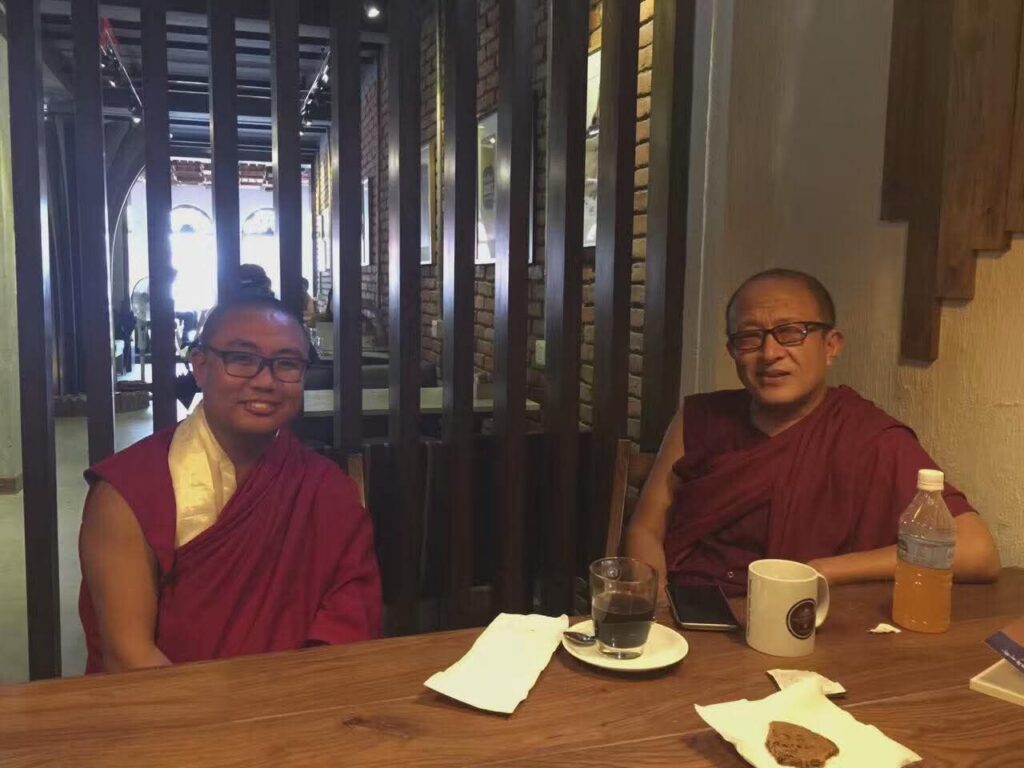
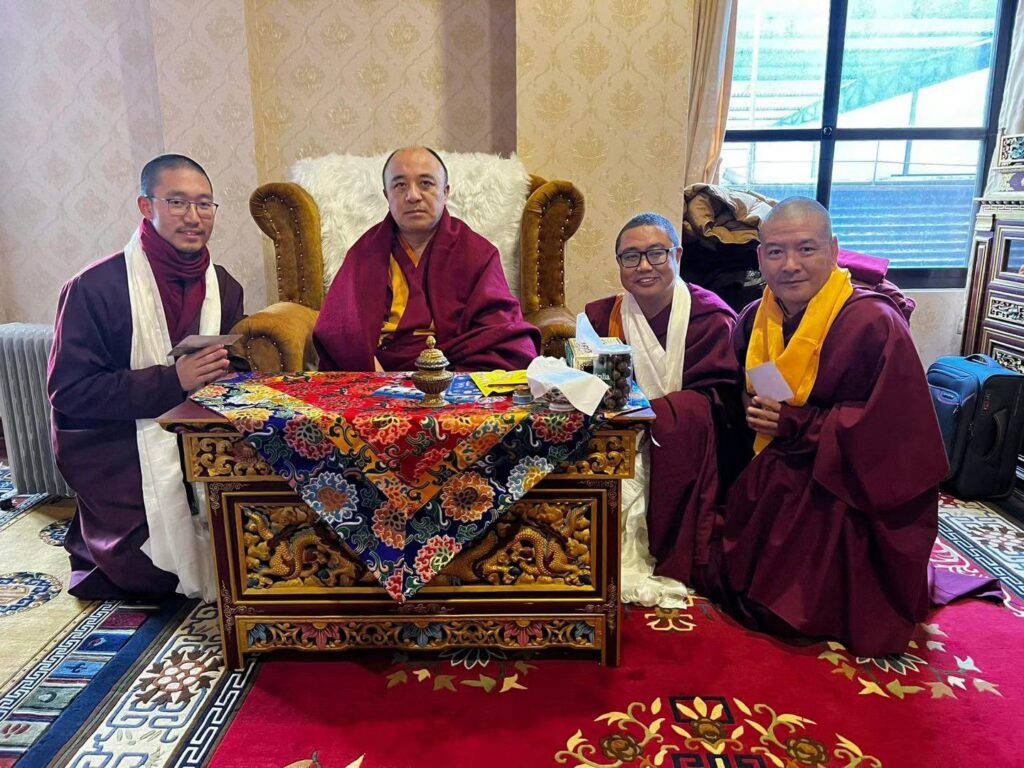
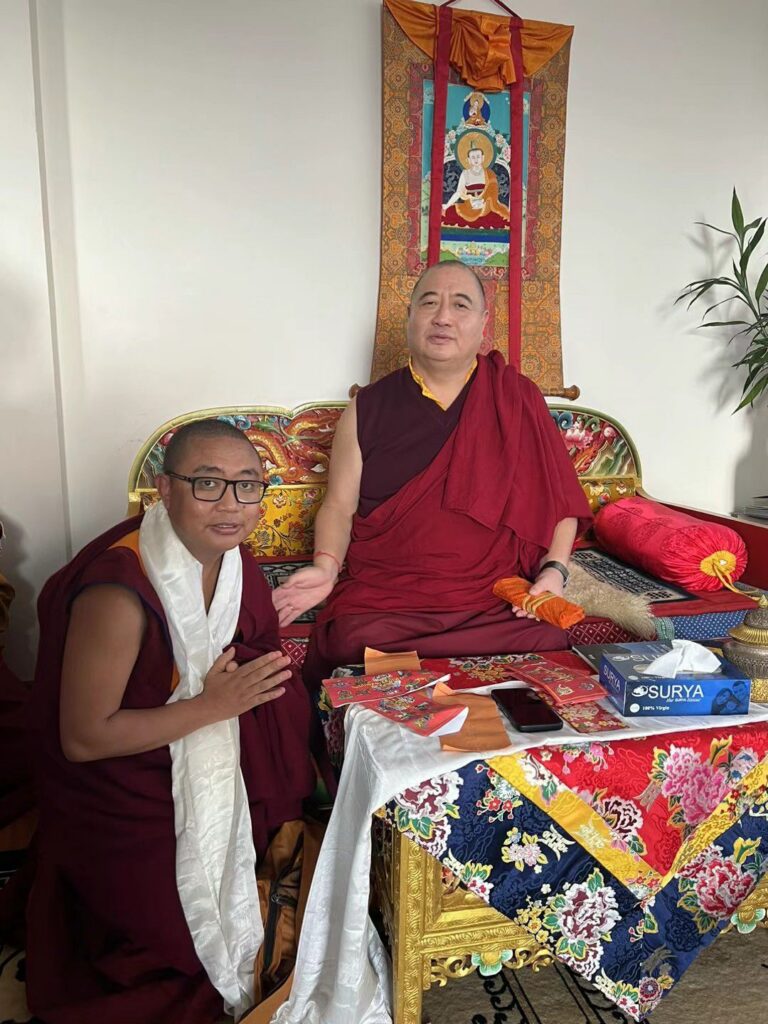
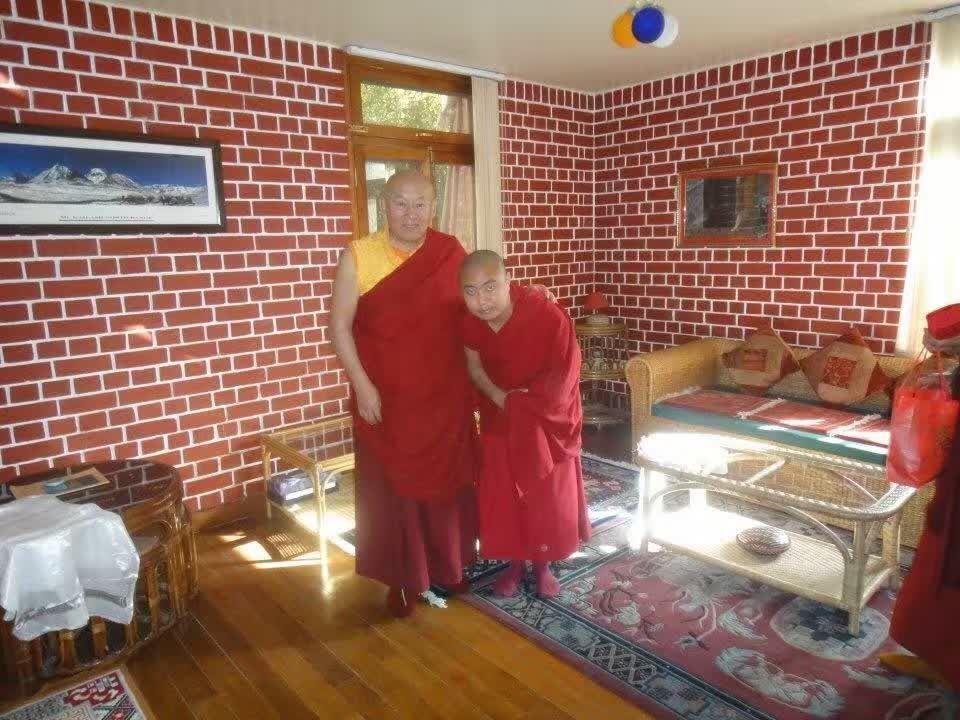
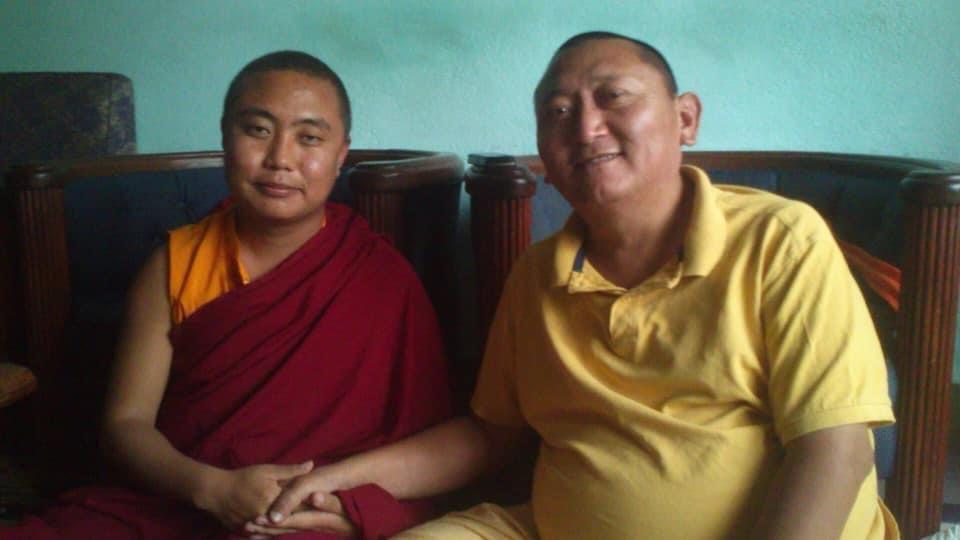
Chinese Vloggers visiting Khorchak Monastery in Ngari, Tibet.